
DUMPSTER RENTAL RESOURCE
Dumpster Weight Limits Explained
Practical information from Dumpster Service Co to help you understand rental options, project planning, placement considerations, and what to confirm with an independent provider.
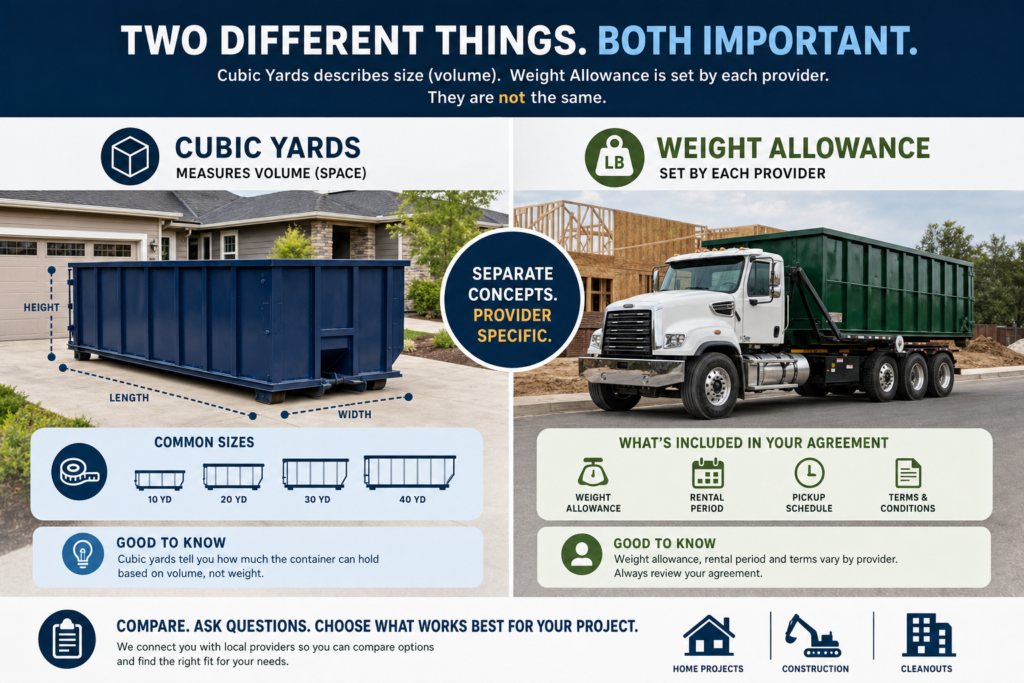
Dumpster cubic-yard capacity and rental weight terms are separate concepts. A rental agreement may include a specified weight allowance, while physical hauling and safe-transport limits are separate operational constraints handled by the provider. Do not assume a larger-volume dumpster automatically includes a proportionally larger weight allowance.
Why Weight Limits Exist
Roll-off trucks are only rated to safely lift and transport a certain amount of weight, and disposal facilities typically charge based on weight received. Weight limits on a rental protect against a container becoming too heavy to transport safely and give both the provider and the customer a clear expectation for what’s included in the base rental.

Why a Dumpster Can Reach Its Weight Limit Before It’s Full
Dense materials—concrete, dirt, brick, tile, and especially roofing shingles—are heavy relative to the space they take up, which means a container can hit its weight limit with a relatively small volume of this type of debris. Lighter, bulkier materials like furniture or general household junk are more likely to fill a container’s volume before weight becomes the limiting factor. See Dumpster Size for Roofing for a common example of a project where weight, not volume, drives the sizing decision.
How Weight Limits Are Set
Weight allowances are generally tied to container size, with larger containers including a higher weight allowance as part of the base rental. Exact limits vary by provider and by local disposal facility requirements, so confirming the specific weight allowance for your container size and project type is worth doing directly with your provider rather than assuming a standard figure applies.
What Happens If You Exceed the Limit
Going over the included weight allowance typically results in an additional charge based on the excess weight. See Dumpster Overage Fees Explained for how these charges are generally structured and how to avoid them.
Estimating Debris Weight Before You Start
If your project involves dense materials, discussing expected debris weight with your provider before the container is delivered helps you choose a size with an adequate weight allowance from the start, rather than discovering a problem partway through the project. See What Size Dumpster Do I Need? for how weight factors into the overall sizing decision.
For a broader overview of what drives dumpster rental pricing, see the Dumpster Rental Cost Guide.
If the rental includes a weight allowance, ask how the provider measures the final load and how charges or handling requirements apply when the agreed terms are exceeded. The billable allowance should not be described as the truck’s literal maximum safe lifting or transport capacity.
Pricing note: Dumpster prices, included weight allowances, rental periods, disposal charges, permit requirements and additional fees vary by provider, disposal facility and location. Review the specific quote and rental agreement rather than relying on a universal fee structure.
Need Dumpster Rental Help?
Call to discuss your project and confirm dumpster options, pricing, availability, material rules, placement requirements, rental terms, and provider-specific details.
Referral Disclosure: Dumpster Service Co is a referral-style informational website. We may help callers connect with independent dumpster rental providers. We do not deliver, own, or haul dumpsters ourselves. Pricing, availability, container options, accepted materials, weight allowances, rental terms, permits, and service details vary by provider and location. Confirm details directly before scheduling service.