
DUMPSTER SIZE RESOURCE
Dumpster Sizes Guide
Project examples can help narrow the choices, but project type alone does not determine dumpster size. Smaller, mid-range or larger containers may be suitable depending on debris volume, material density, provider limits and disposal requirements.
- Plan dumpster size, delivery, placement, and disposal needs
- Understand common rental cost and scheduling considerations
- Use detailed supporting articles for specific project questions
- Confirm pricing, availability, limits, and disposal rules directly with the provider

Volume and Weight Are Separate Limits
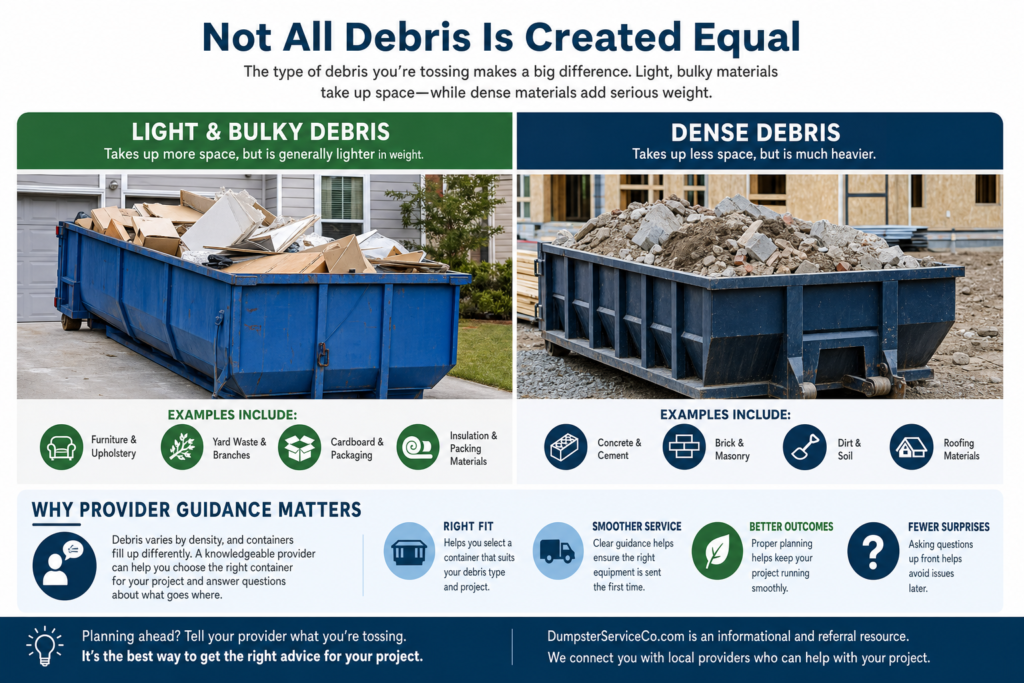
A dumpster’s size describes its volume, but the amount of debris it can actually hold is also limited by weight, and container volume isn’t the same as allowed or included load weight. Dense materials like concrete, dirt, tile, or roofing shingles can reach a weight limit well before a container looks full by volume, while lighter, bulkier debris like furniture is more likely to fill the container’s volume first. Because weight allowances vary by provider and container, confirming the specific limit for your chosen size is worth doing before your project begins.

General Size Tiers
- Smaller containers suit single-room cleanouts, small renovations, or minor decluttering projects. See 10 Yard Dumpster Size Guide.
- Mid-range containers work for larger cleanouts or moderate renovation projects. See 15 Yard Dumpster Size Guide.
- Larger mid-range containers suit bigger renovations or whole-home cleanouts. See 20 Yard Dumpster Size Guide.
- Large containers are common for major renovations, new construction, or large cleanout projects. See 30 Yard Dumpster Size Guide.
- The largest common containers are typically reserved for major construction, demolition, or commercial projects. See 40 Yard Dumpster Size Guide.
Exact dimensions and weight allowances vary by provider, so these tiers are a general starting point rather than a fixed standard.
Sizing for a Home Cleanout
Home cleanouts tend to generate bulky but relatively light debris like furniture and boxes, which usually makes volume the main constraint rather than weight. How much space is needed generally scales with how much of the home is being cleared out.
See Dumpster Size for a Home Cleanout for how to match a size to the scope of your cleanout.
Sizing for Roofing
Roofing debris is dense, so weight limits can become a major sizing constraint even when a container still has unused volume. Confirm roofing-specific container and weight requirements with the provider.
See Dumpster Size for Roofing for how weight factors into this specific project type.
When You’re Between Two Sizes
If you’re between sizes, discuss both debris volume and material weight with the provider. A larger container may help with bulky debris, while dense materials can require a specific container, smaller size, clean-load arrangement or special weight limit.
Next Steps
Once you have a sense of which size tier fits your project, the linked size guides above cover what each one typically handles. For the broader rental process beyond sizing, see the Dumpster Rental Guide.
Rental note: Dumpster Service Co provides informational/referral content. Container availability, accepted materials, weight/disposal structures, rental periods, extensions, delivery/pickup requirements, permit handling and pricing vary by provider, disposal facility, project and location. Confirm the quoted scope and loading rules directly with the rental provider.
Need Dumpster Rental Help?
Call to discuss your project and confirm dumpster sizes, pricing, delivery, pickup, availability, weight limits, and disposal rules directly with the provider.
Referral Disclosure: Dumpster Service Co. is a referral-style informational website. We may help callers connect with independent service providers. We do not provide dumpster rental, delivery, or pickup ourselves. Pricing, availability, container sizes, delivery and pickup schedules, disposal rules, weight limits, prohibited materials, permits, and provider capabilities may vary. Always confirm details directly before scheduling service.