
DUMPSTER RENTAL RESOURCE
What Size Dumpster Do I Need
Practical information from Dumpster Service Co to help you understand rental options, project planning, placement considerations, and what to confirm with an independent provider.
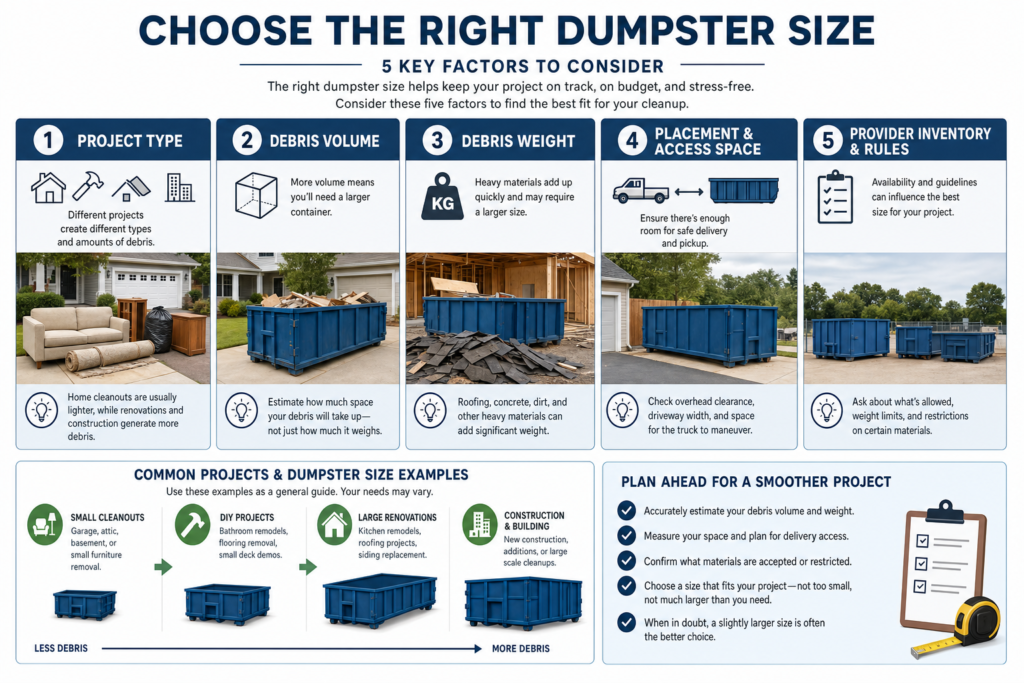
The right dumpster size depends on five practical factors: project type, debris volume, debris weight, available placement and delivery access, and the container sizes/rules offered by the rental provider. Cubic-yard capacity is useful, but it should not be the only sizing factor.
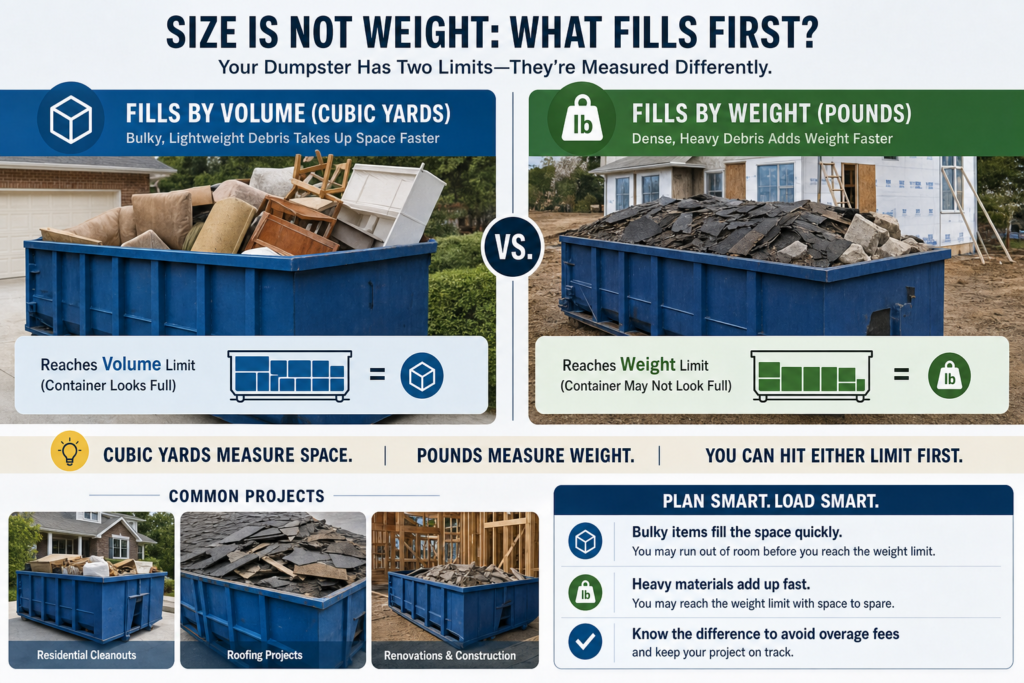
Volume vs. Weight
A dumpster that looks far from full by volume can still reach its weight limit early if you’re disposing of dense materials like concrete, dirt, roofing shingles, or tile. For lighter, bulkier debris like furniture or general household junk, volume is usually the limiting factor instead. Knowing which type of debris you’re dealing with helps you avoid choosing a size based on volume alone. See Dumpster Size for Roofing for an example of a project where weight, not volume, typically drives the sizing decision.
General Size Tiers
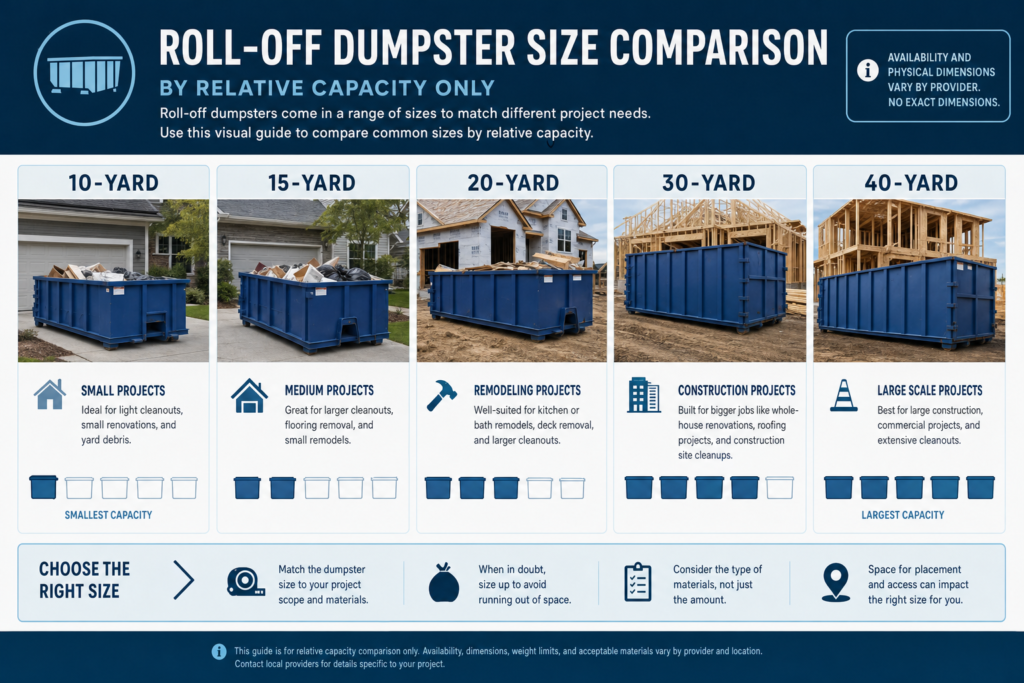
Dumpster sizes generally fall into a few tiers, each suited to a different scale of project:
- Smaller containers (around 10 yards) are suited to single-room cleanouts, small renovations, or minor decluttering projects. See 10 Yard Dumpster Size Guide.
- Mid-range containers (around 15 yards) work for slightly larger cleanouts or moderate renovation projects. See 15 Yard Dumpster Size Guide.
- Larger mid-range containers (around 20 yards) suit bigger renovations or whole-home cleanouts. See 20 Yard Dumpster Size Guide.
- Large containers (around 30 yards) are common for major renovations, new construction, or large cleanout projects. See 30 Yard Dumpster Size Guide.
- The largest common containers (around 40 yards) are typically reserved for major construction, demolition, or commercial projects generating substantial debris. See 40 Yard Dumpster Size Guide.
Exact dimensions and weight limits vary by provider, so these size categories are a general starting point rather than a fixed standard.
Matching Size to Project Type
Certain project types have their own sizing considerations worth looking at directly. See Dumpster Size for a Home Cleanout and Dumpster Size for Roofing for two common examples.
When You’re Not Sure
If you’re between two sizes, sizing up slightly is often the safer choice, since running out of room mid-project typically means arranging a second dumpster or an early pickup and exchange, both of which add complexity compared to having a bit of extra room from the start. Sharing your project details with a provider directly is the most reliable way to get a size recommendation suited to your specific situation.
For a broader overview of dumpster sizing, see the Dumpster Size Guide.
Check Placement and Provider Inventory
A container that fits the debris estimate still needs a suitable placement area and enough access for the provider’s delivery equipment. Physical dimensions can vary even among dumpsters with the same nominal cubic-yard capacity, and not every provider offers 10-, 15-, 20-, 30- and 40-yard containers. Confirm the actual container footprint and delivery requirements before ordering.
Size planning note: Cubic-yard size describes approximate container capacity, while the allowed load weight is a separate rental limit. Physical dimensions, weight allowances, accepted materials and available sizes vary by provider. Dense debris can reach a weight limit before the container appears full.
Need Dumpster Rental Help?
Call to discuss your project and confirm dumpster options, pricing, availability, material rules, placement requirements, rental terms, and provider-specific details.
Referral Disclosure: Dumpster Service Co is a referral-style informational website. We may help callers connect with independent dumpster rental providers. We do not deliver, own, or haul dumpsters ourselves. Pricing, availability, container options, accepted materials, weight allowances, rental terms, permits, and service details vary by provider and location. Confirm details directly before scheduling service.